
Real Home
Social Awareness Campaign · Zine, Poster Series & Website
-My Role-
Concept / Narrative Illustration / Brand Identity / Zine & Poster Design / Website Design
-Project Goal-
Help girls and women recognize how “love” and labels shrink them, and empower them to reclaim their identity
-Scope-
ZINE
INTERACTIVE POSTERS
WEBSITE
BRAND SYSTEM
Real Home
Do you worry about your body more than you want to?
Do you catch yourself eating less just to “look better”?
Do you dress or pose a certain way because you feel watched?
Do you keep shrinking yourself to fit what others expect?
Introduction & Campaign Goals
A campaign exposing how “love” and social expectations shrink girls into smaller versions of themselves.
With dark humor and bold visuals, it helps girls and women recognize these pressures and reclaim their identity.
Audience + Context
For young women, teen girls, parents, and educators shaped by beauty culture and gender expectations, inviting them to notice how body control and “soft” restrictions show up at home and in society.
Brand Identity System
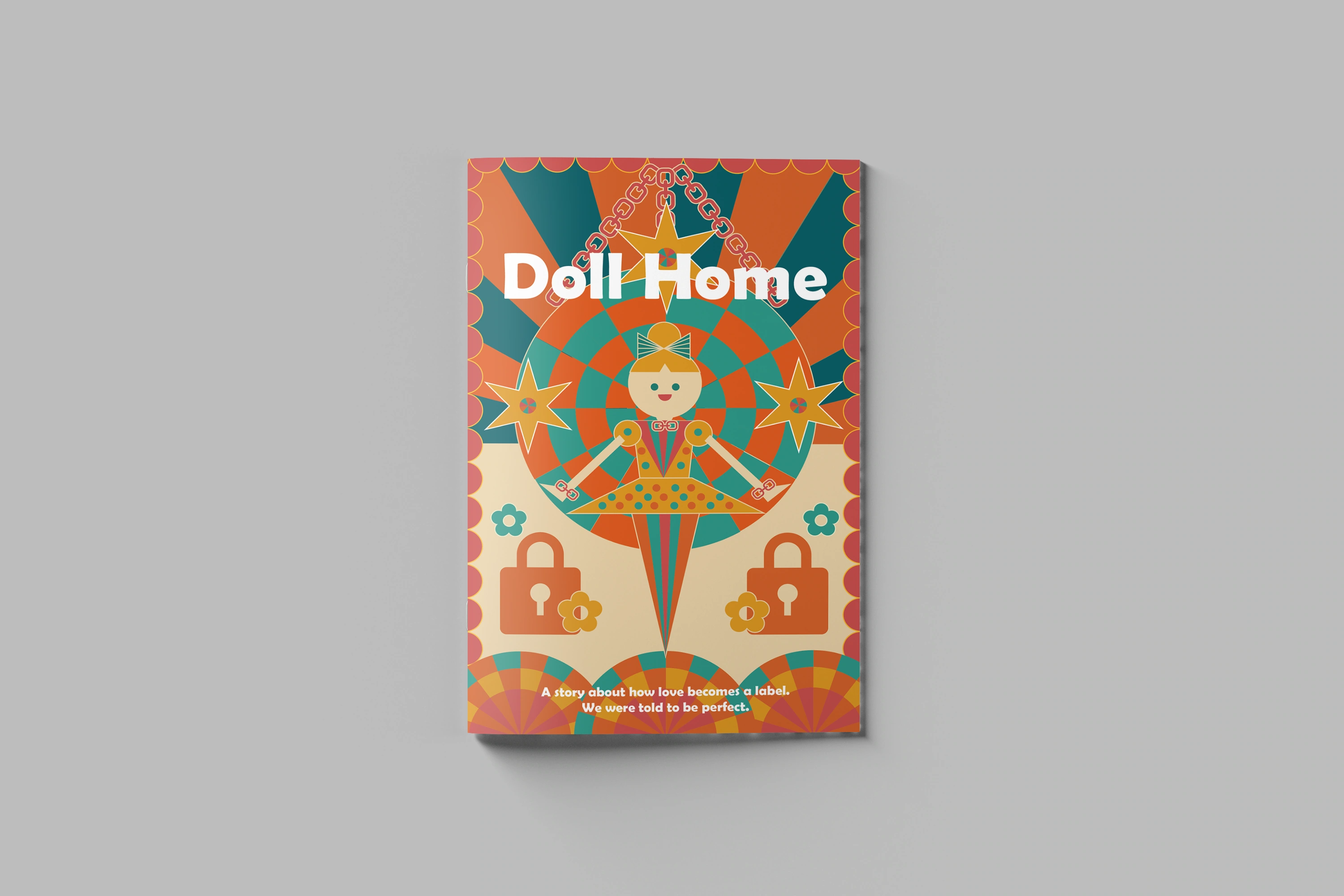
Bright, soft colors and geometric, cartoon-like forms balance dark humor with serious themes.
Doll Home: pearl chains, ornate shells, ribbon-tied hands, beautiful things that confine.
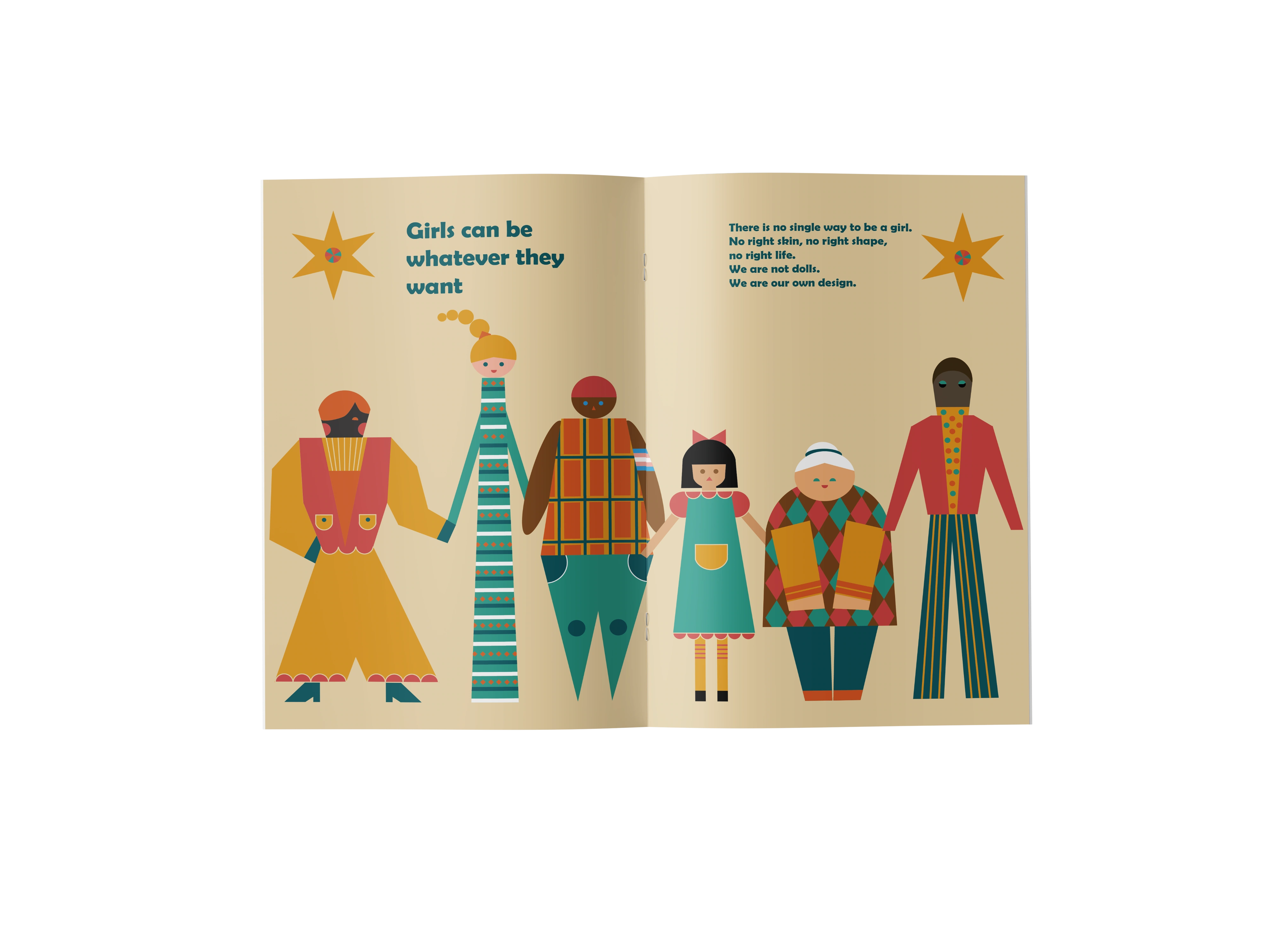
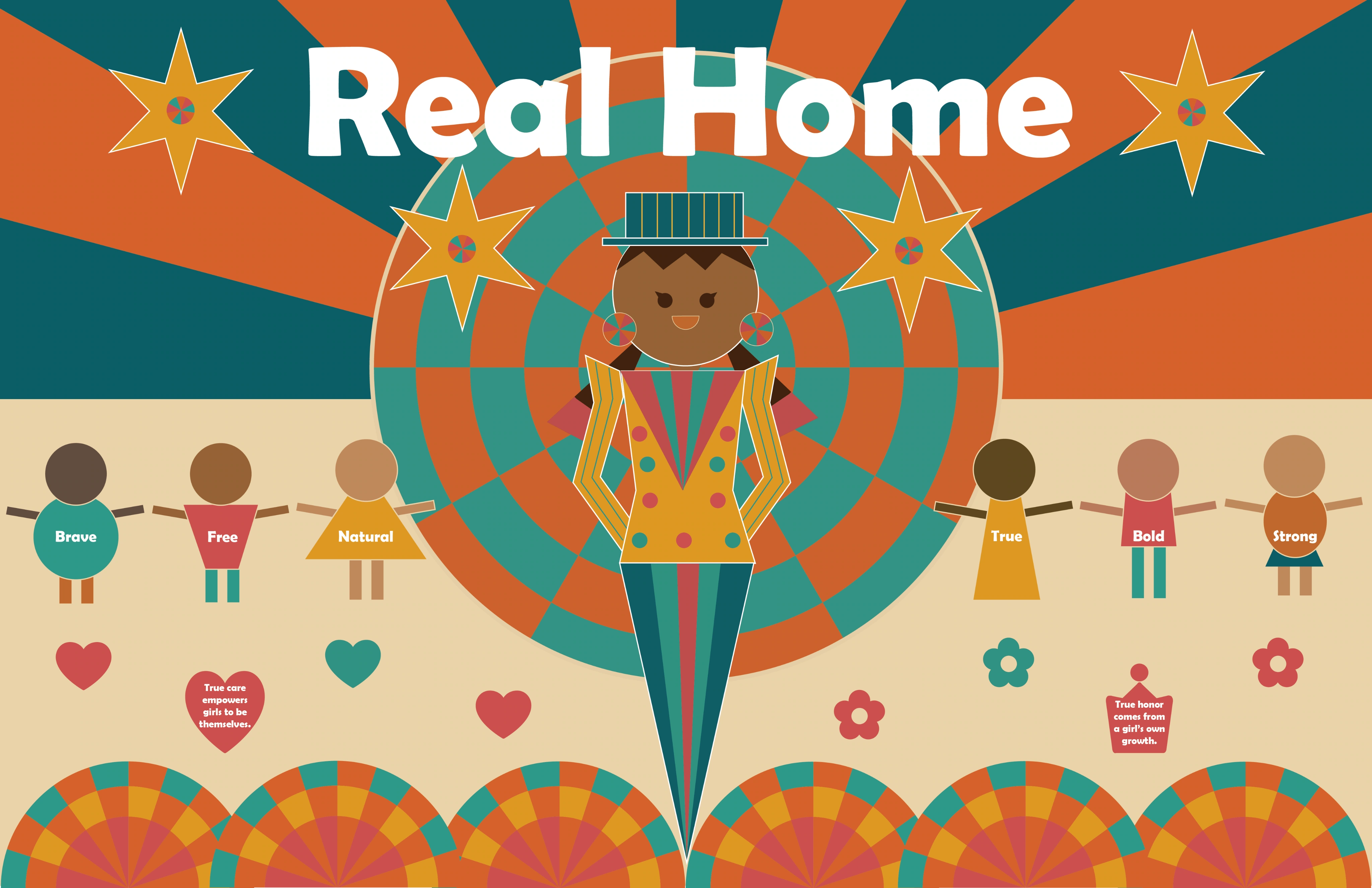
Real Home: diverse girls of every body and identity, free to define themselves.


Strong


Bold


True
Brand Identity System
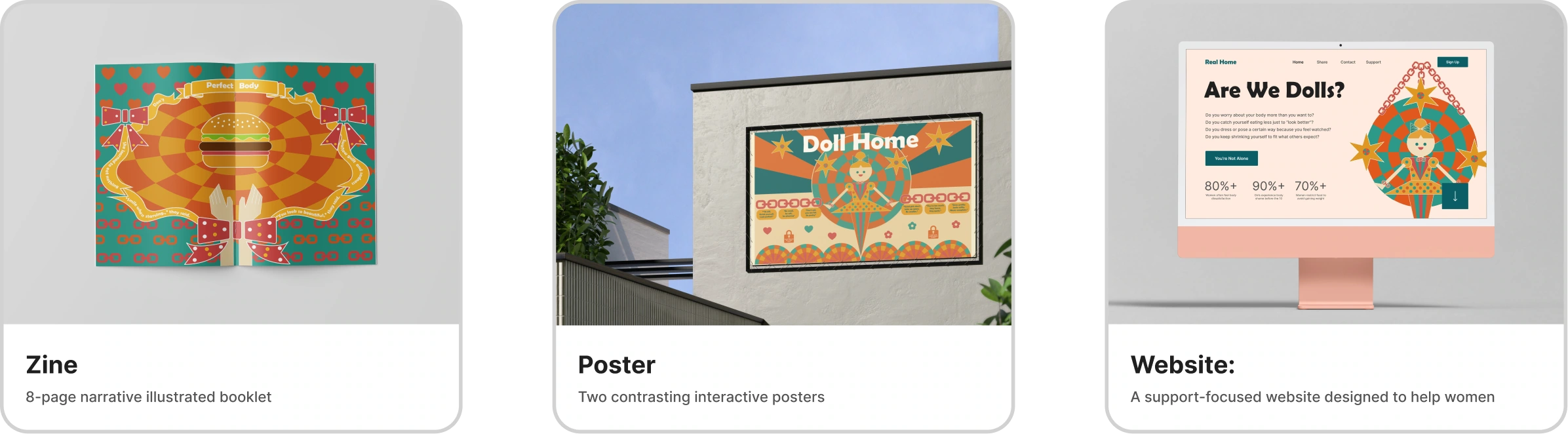
Three formats—Zine, Poster Series, Website—built around one idea: labels can be removed, identities reclaimed.
Zine
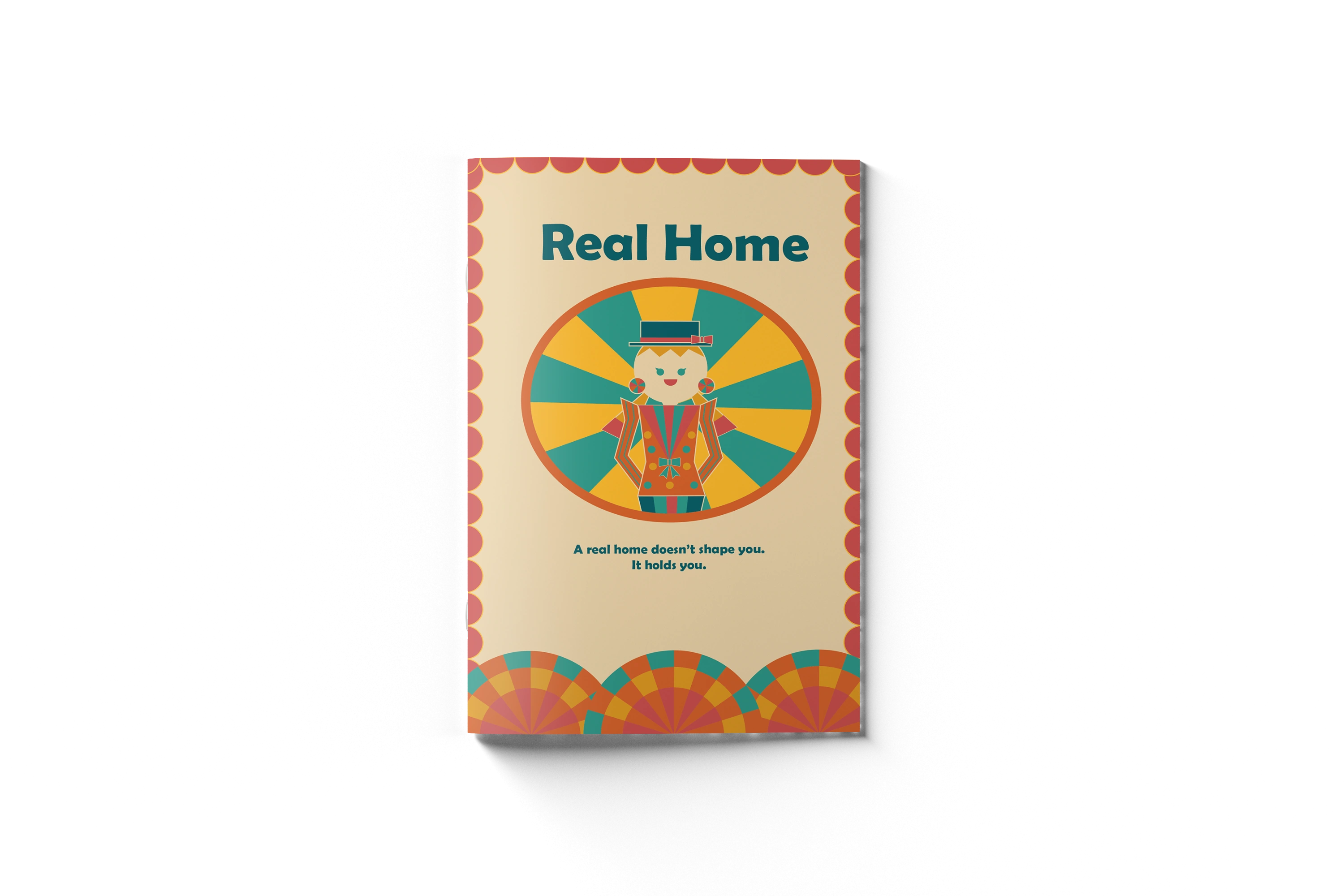
A girl raised in the restrictive “Doll Home,” where love becomes an excuse to bind, shrink, and silence her.
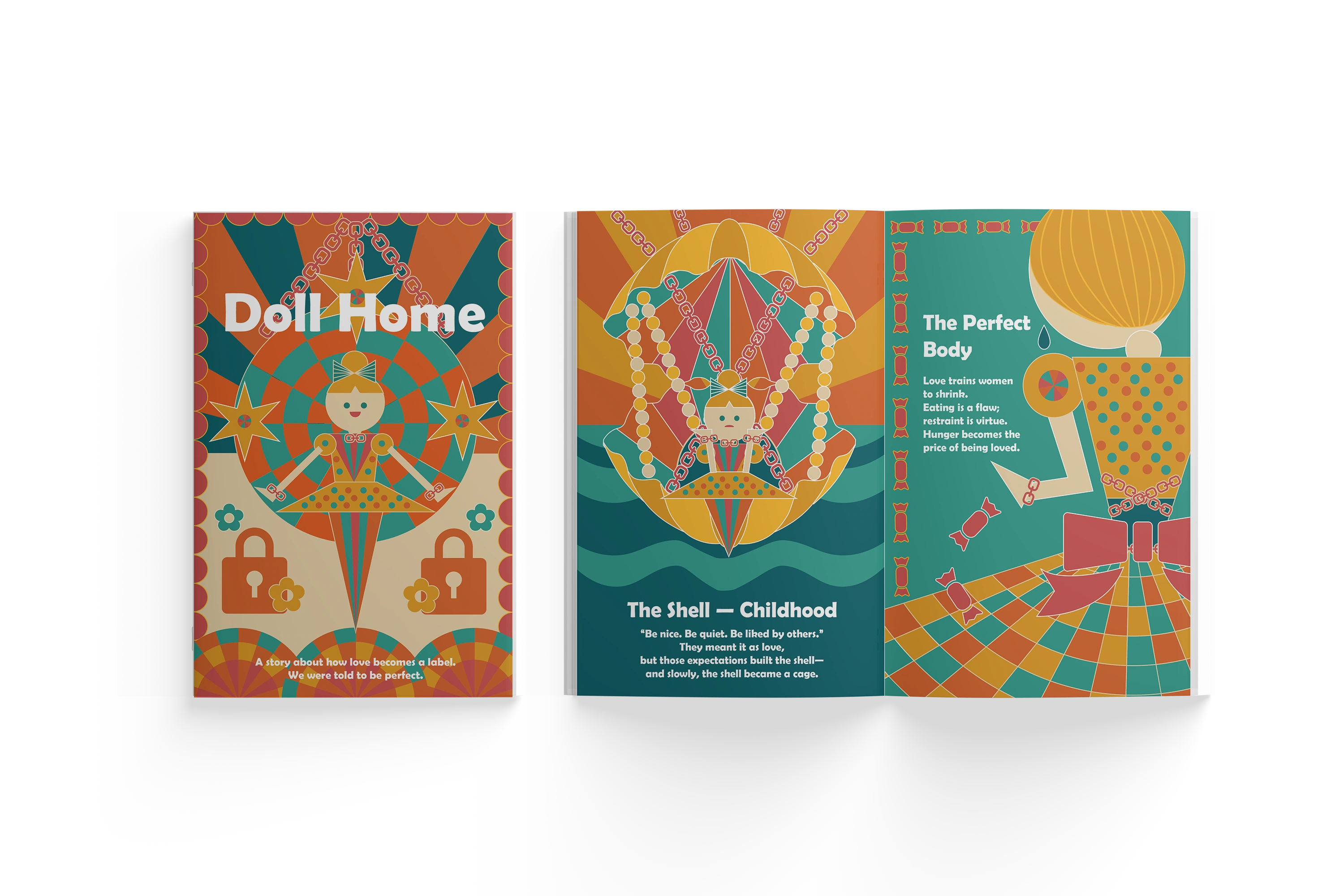
As the shell cracks open, she learns her hunger, body, and choices were never flaws.
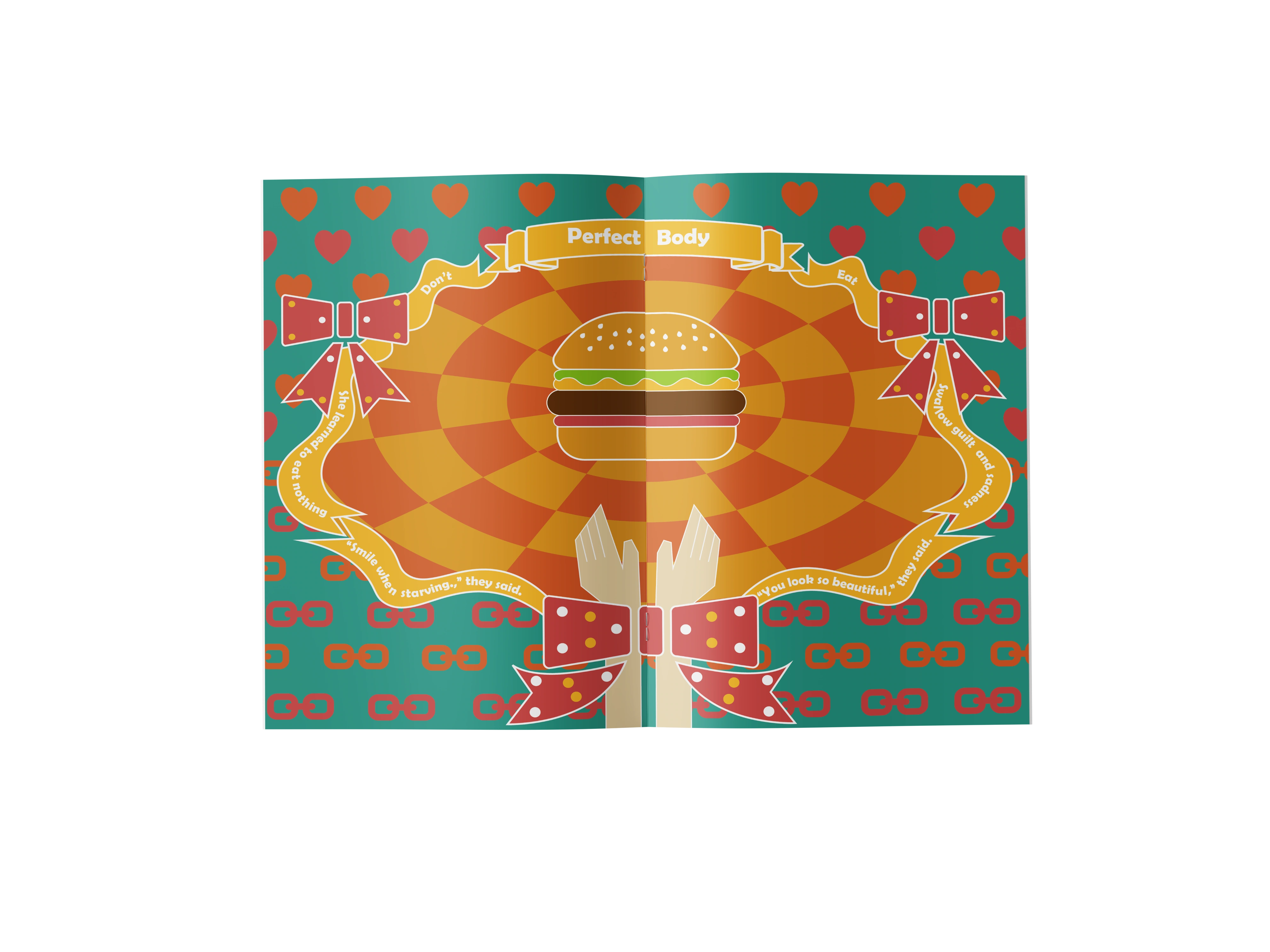
The story ends in an inclusive Real Home, with a peel-off label inviting readers to claim their own identity.
Poster
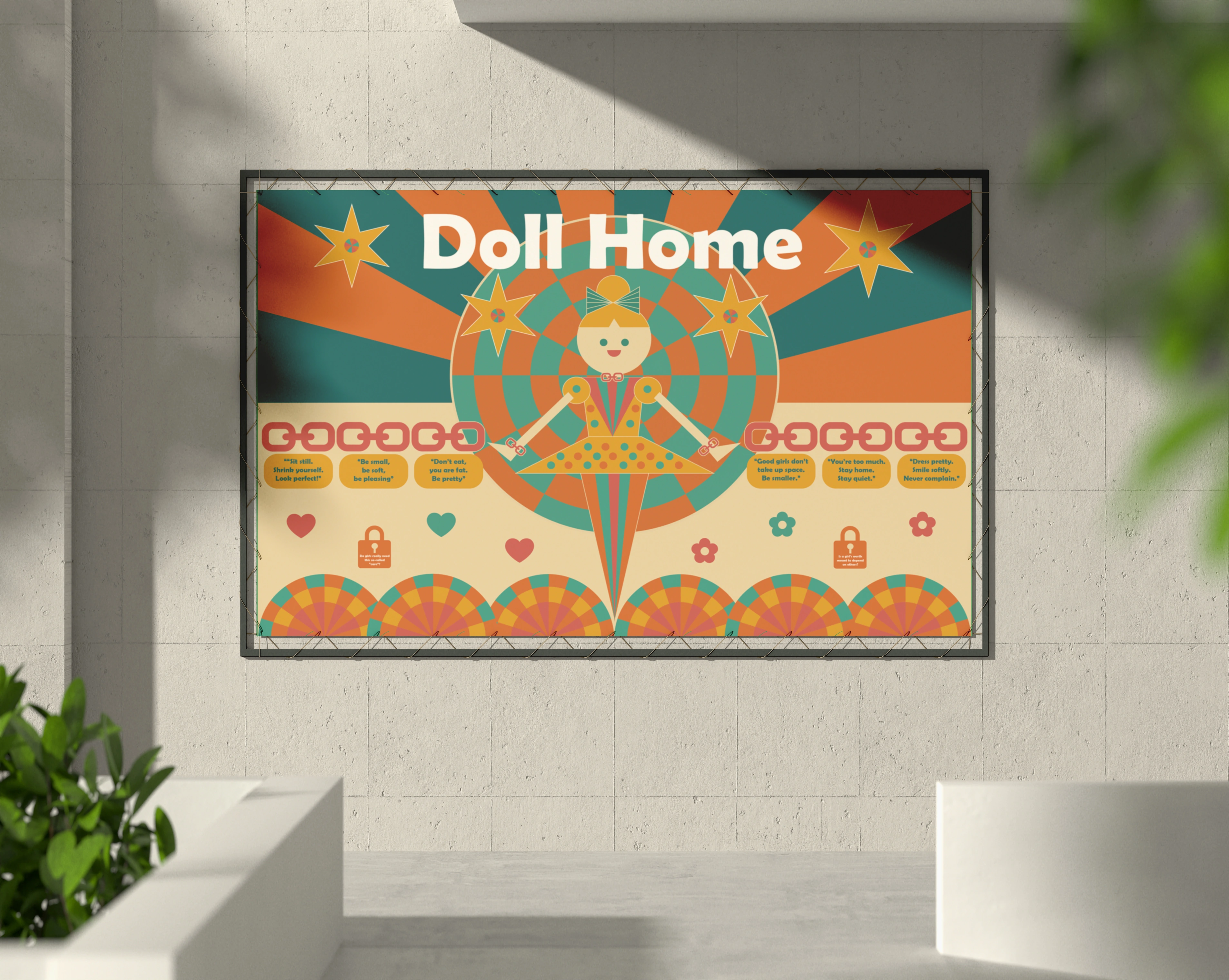
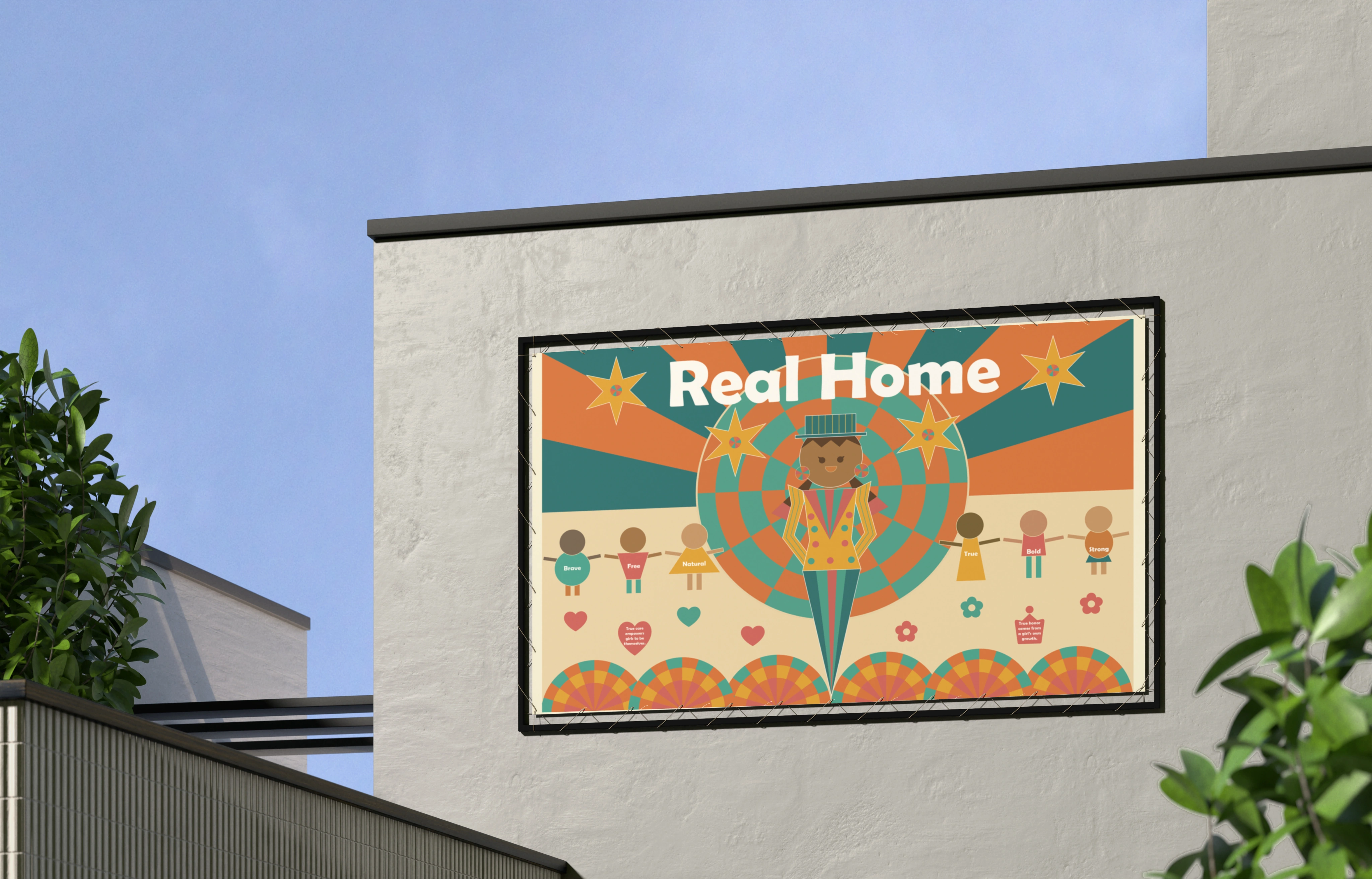
The oppressive “Doll Home,” covered in labels like “Be quiet” and “Stay pretty,” hides the empowering “Real Home” beneath.
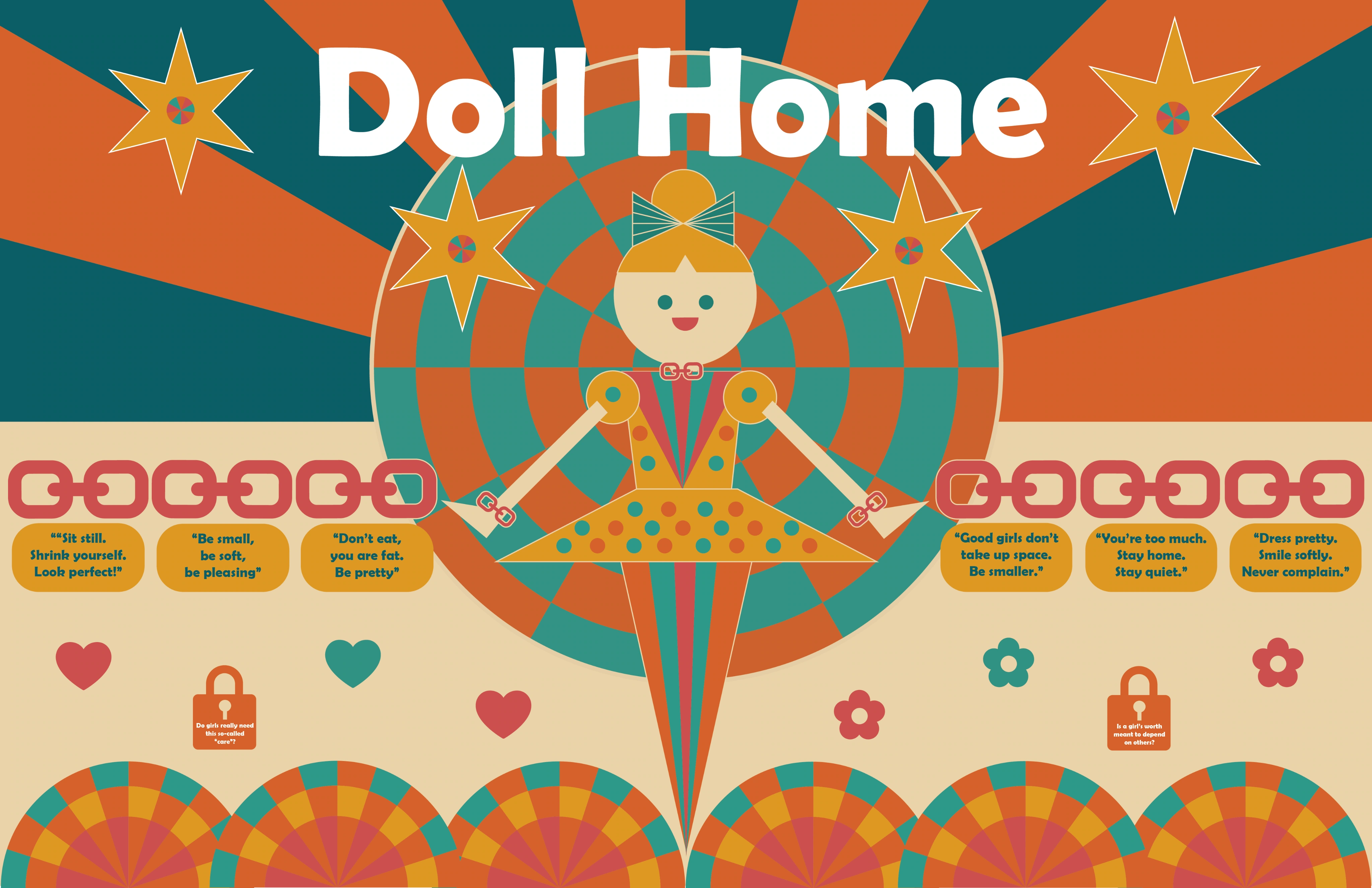
Viewers peel away the labels to reveal the second layer—turning unlabeling into a physical act.
Website
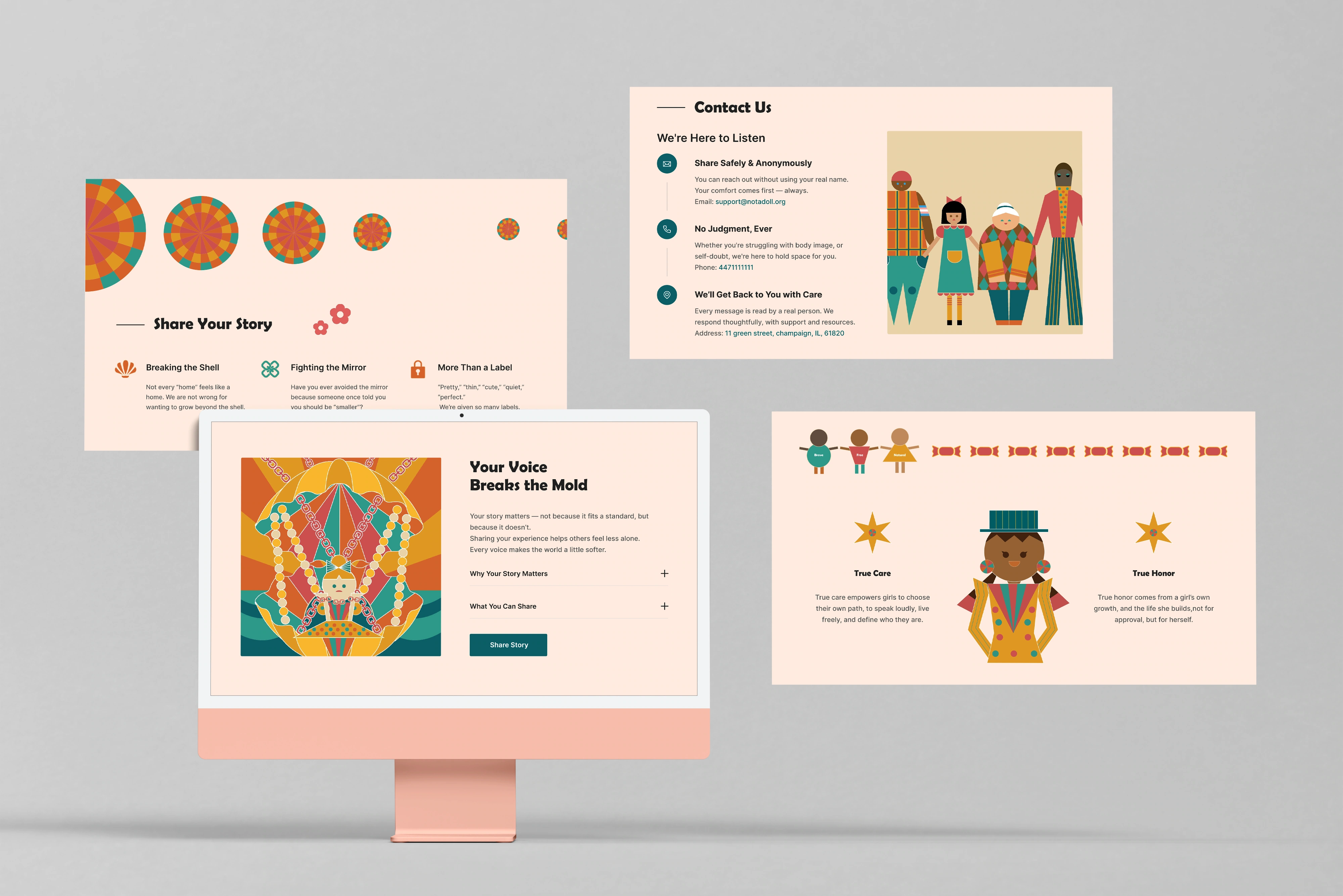
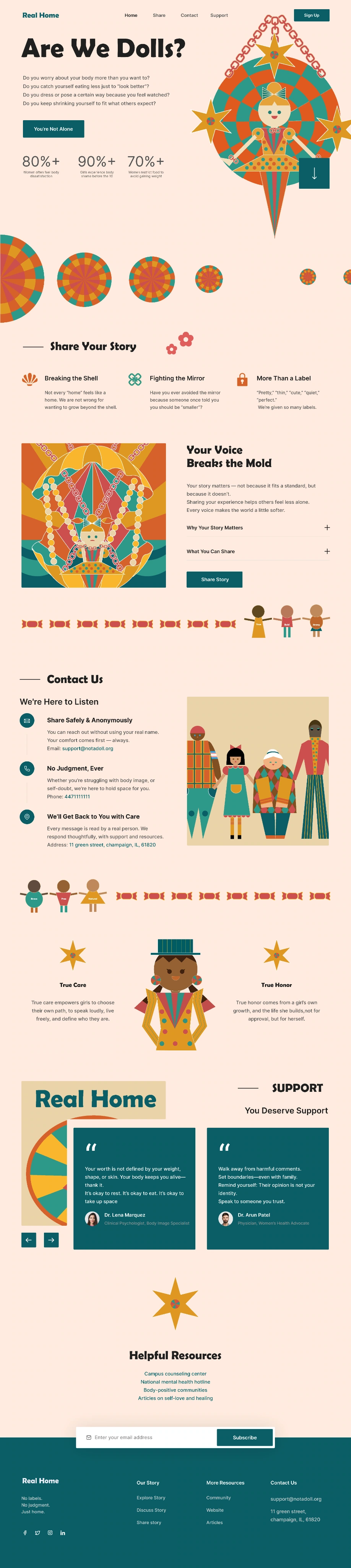
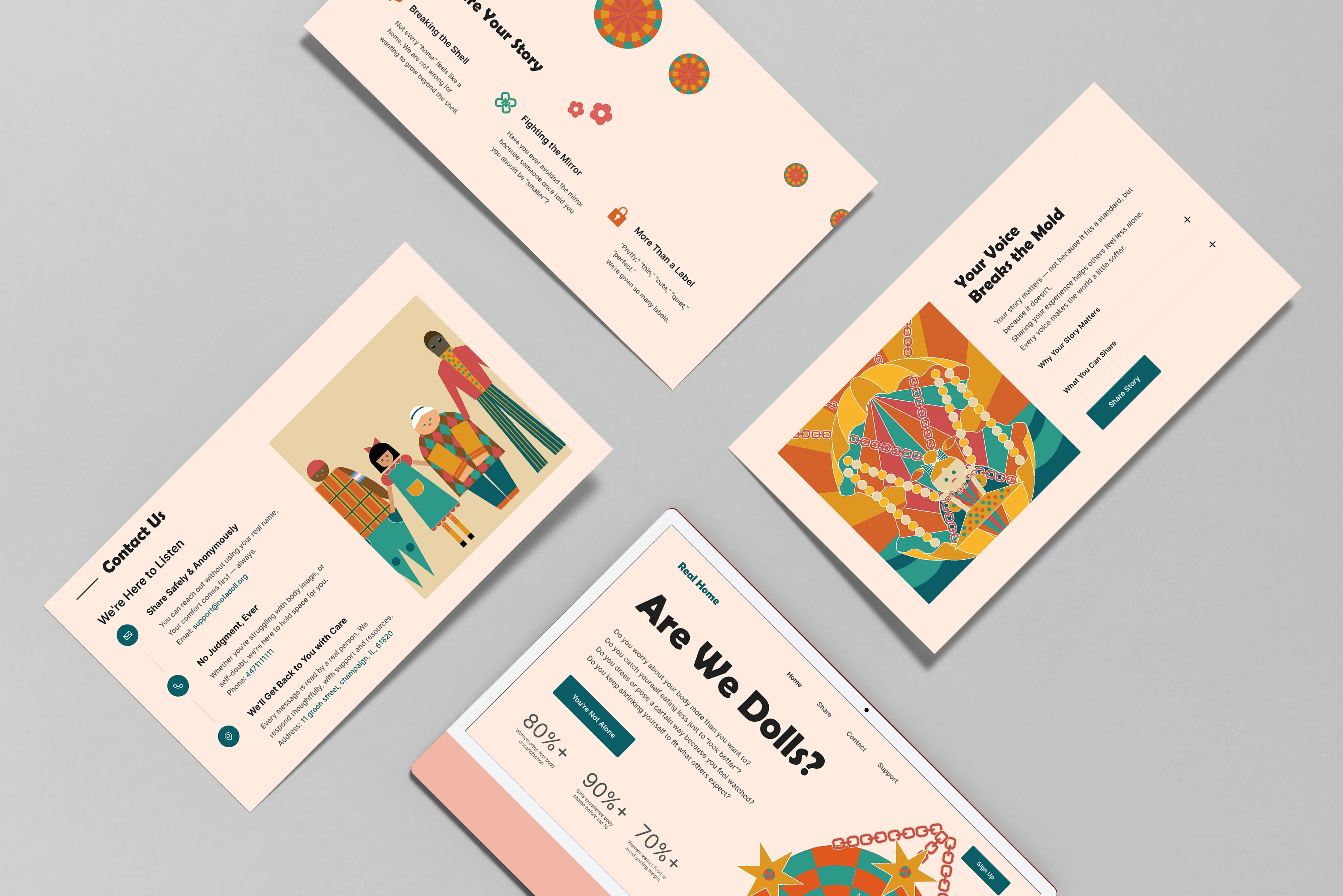
A safe space to share experiences with body shame, find support and resources, and break free from harmful labels.
Design System
Logo
Palette






#ead2a8
#de9823
#d5612a
#cb4f4d
#2e9887
#0a5e65
Typeface
Berlin Sans FB Demi
Inter
For zine and poster headlines; website main headings and secondary headings.
For website subheadings and content paragraphs.
Process Work
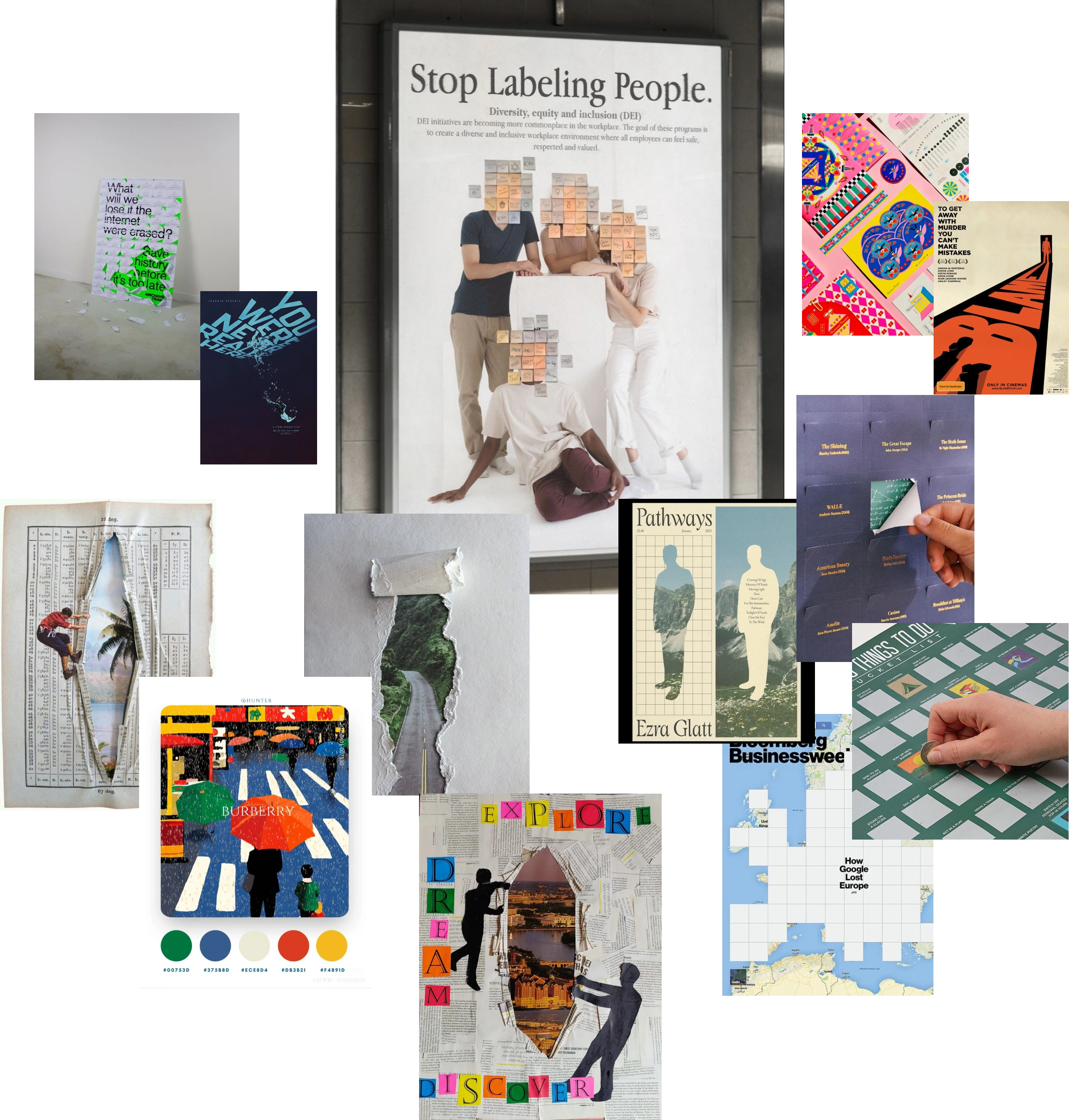
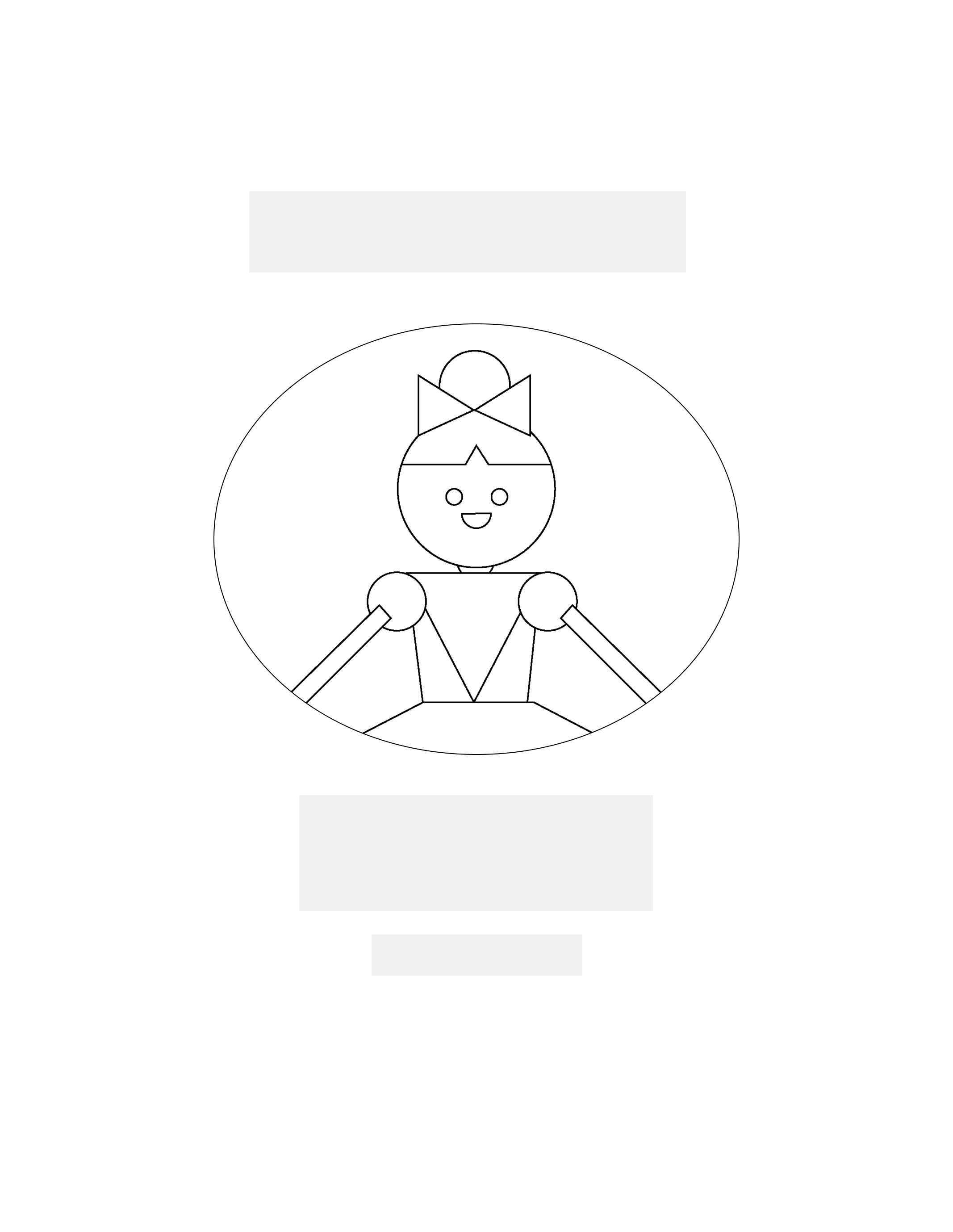
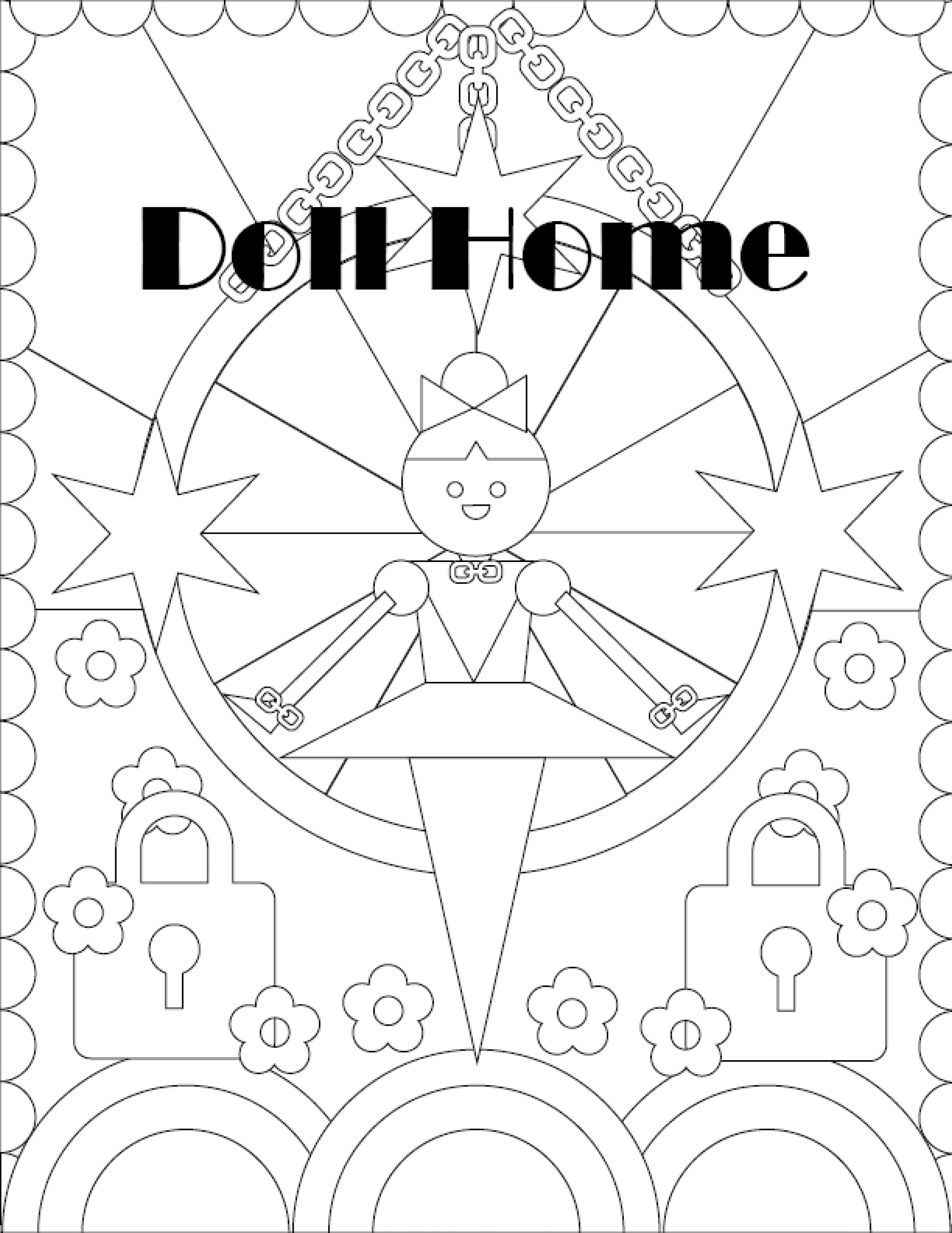
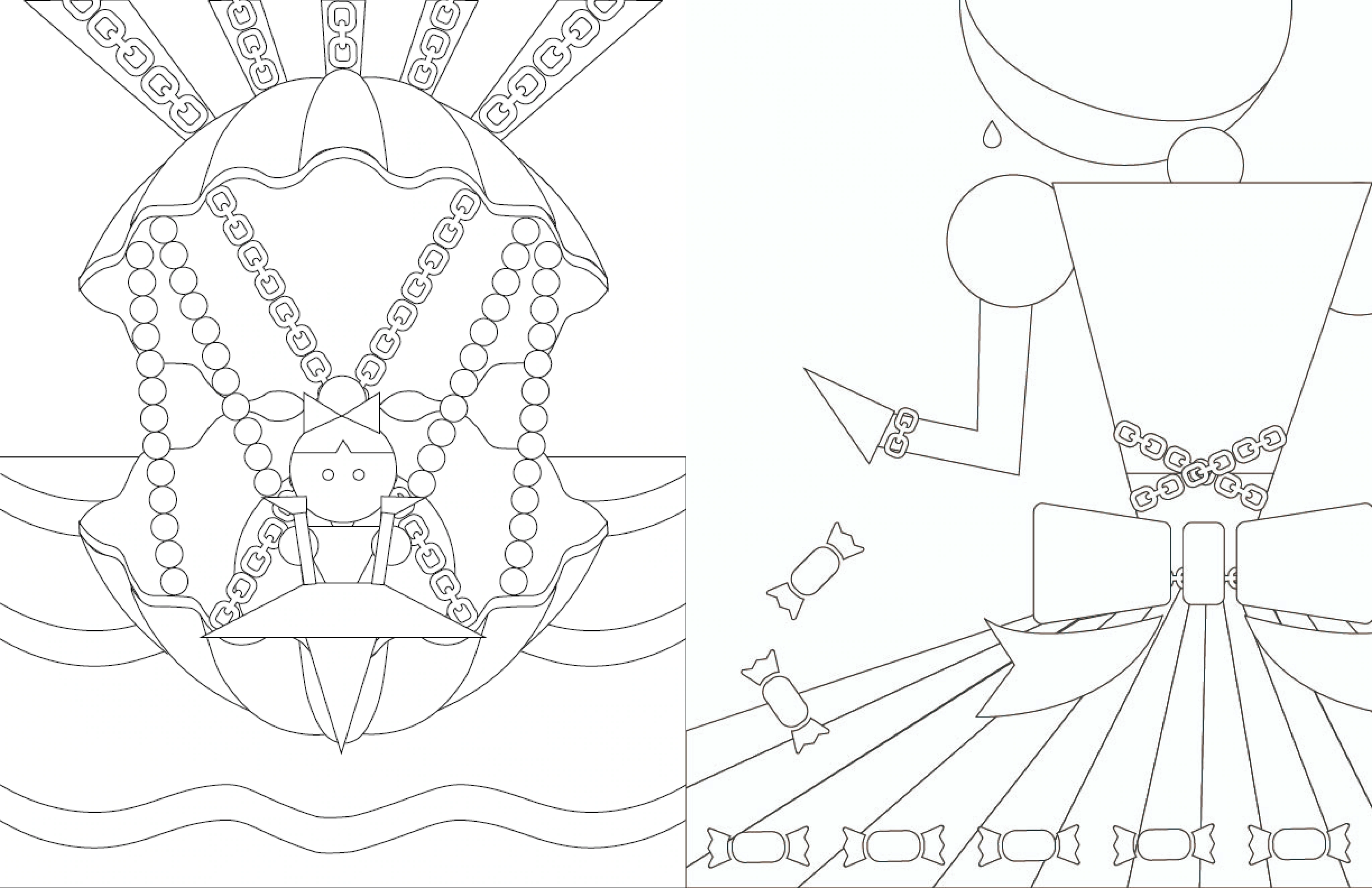
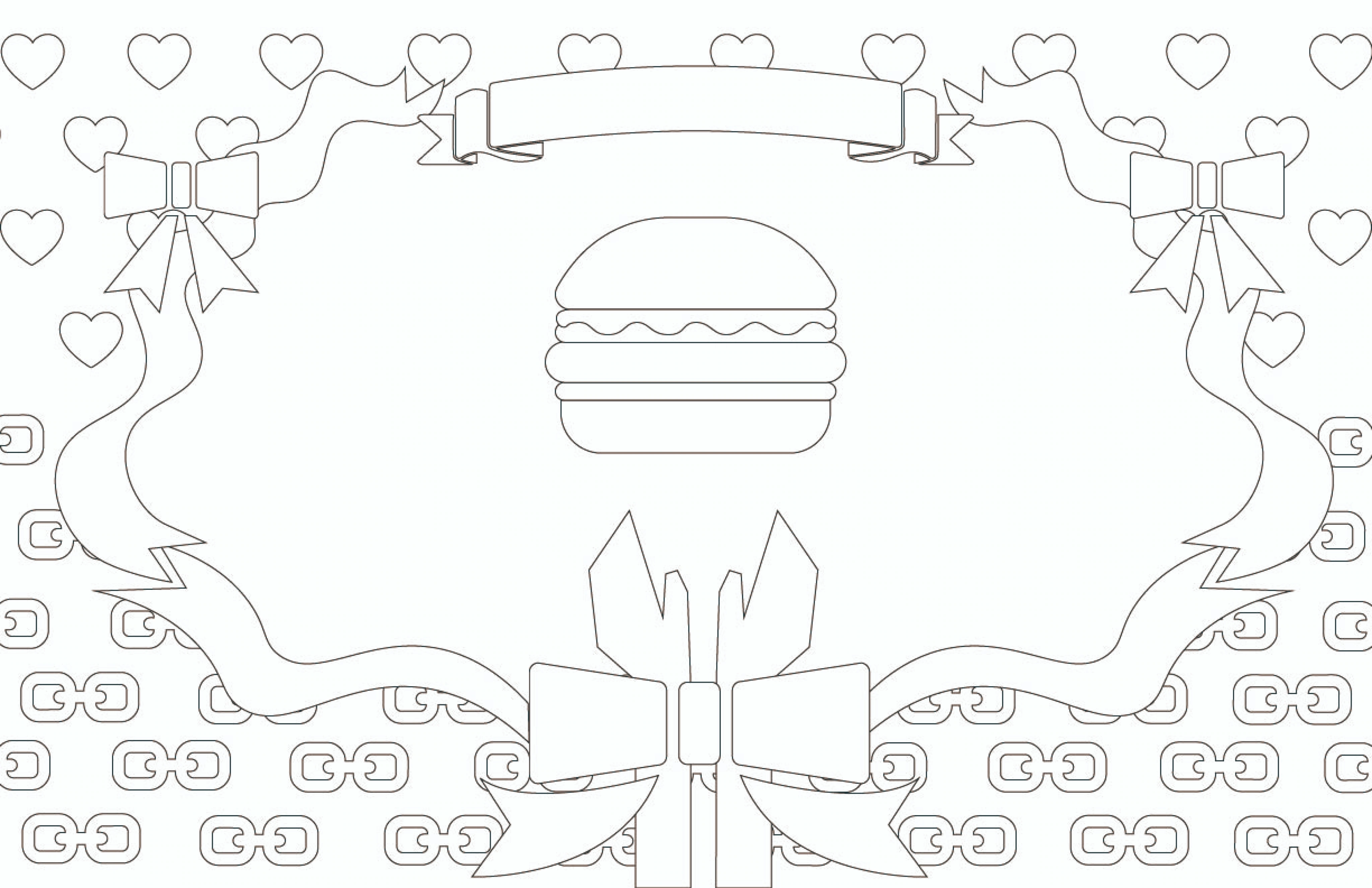
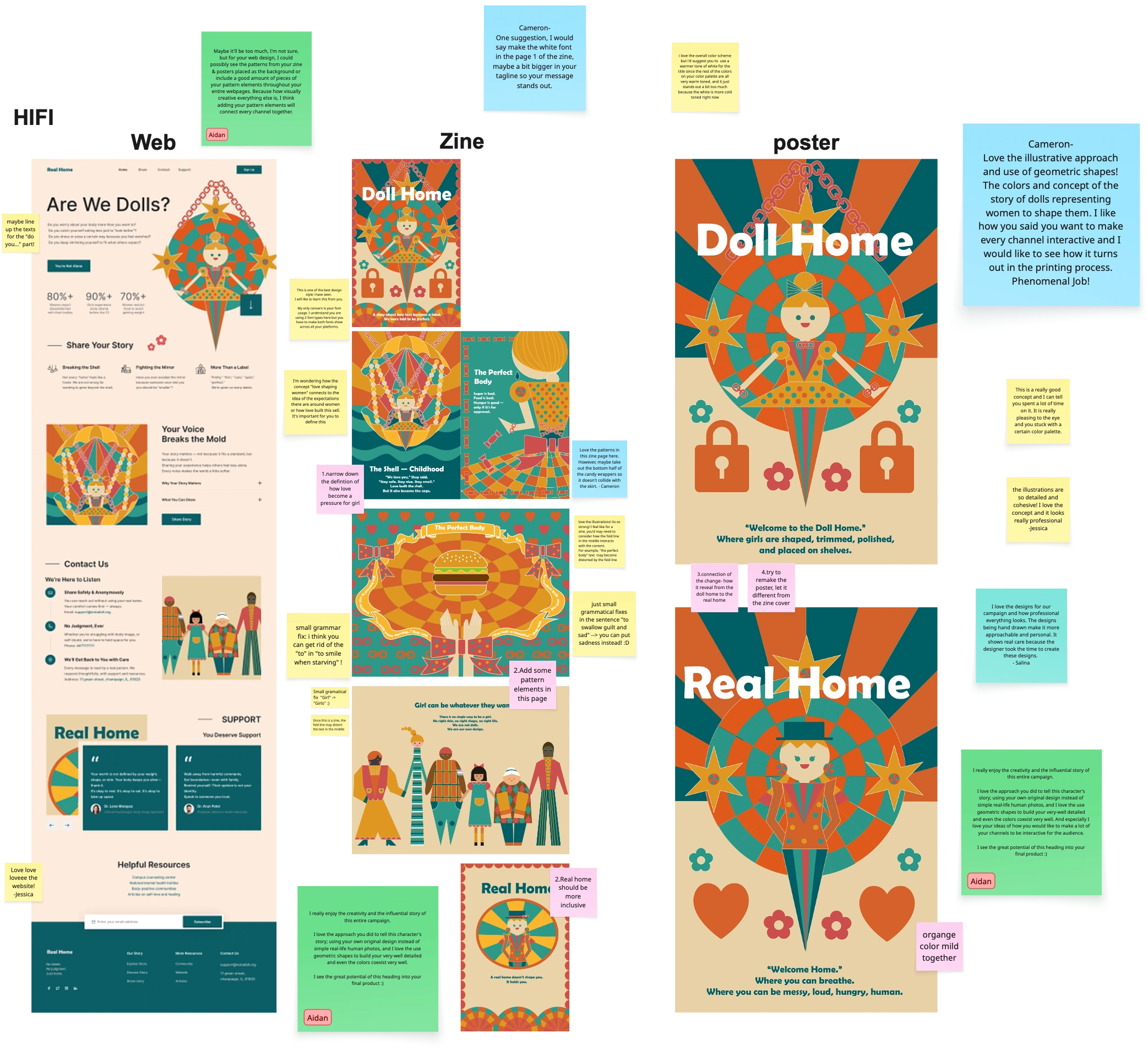
The process includes mood boards, narrative exploration, illustration development, prototyping, and feedback cycles. Draft posters, zine thumbnails, website wireframes, and color tests document the evolution from initial concept to final cohesive campaign.
Mood Board
Draft
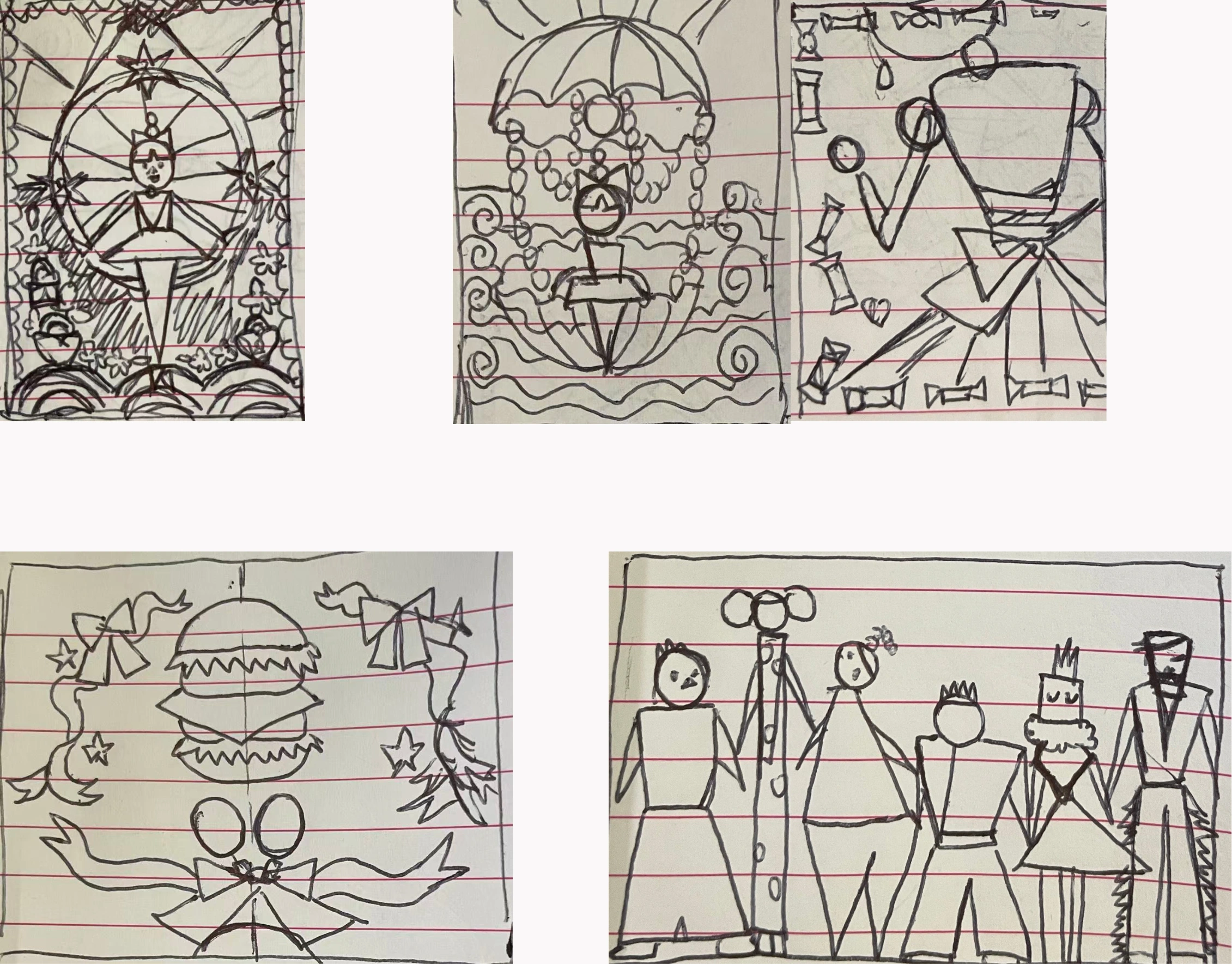
Prototype

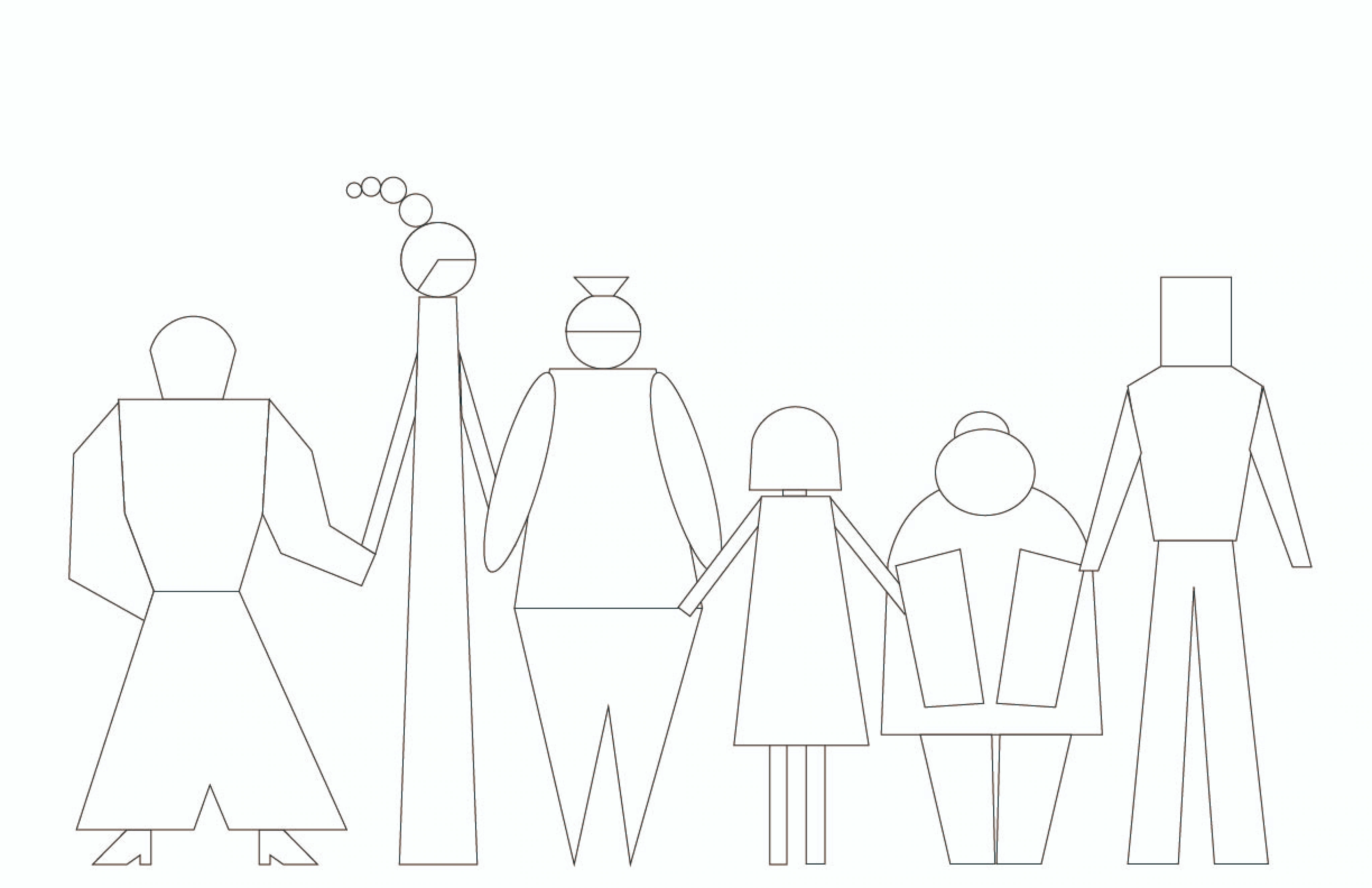
Color Test
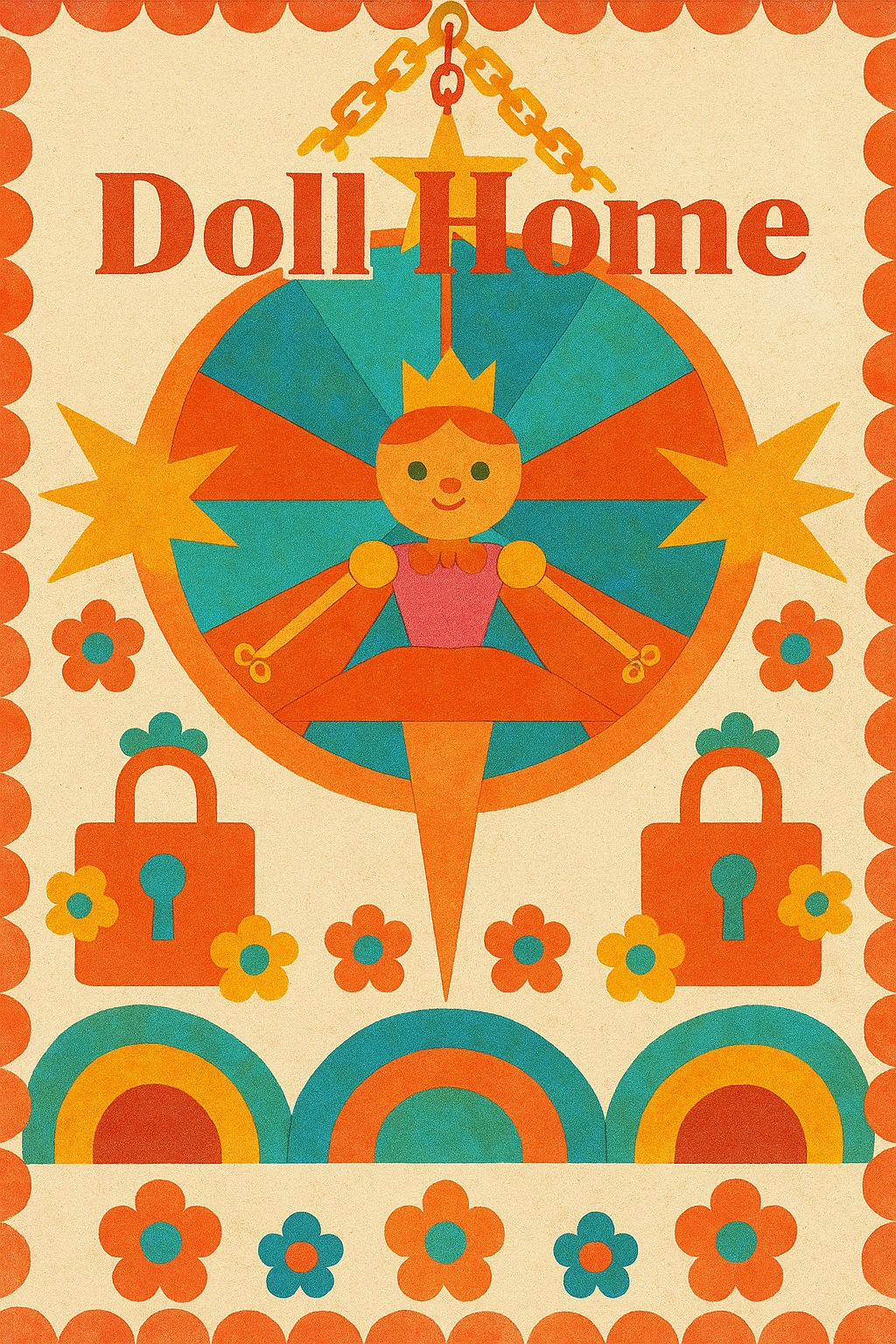
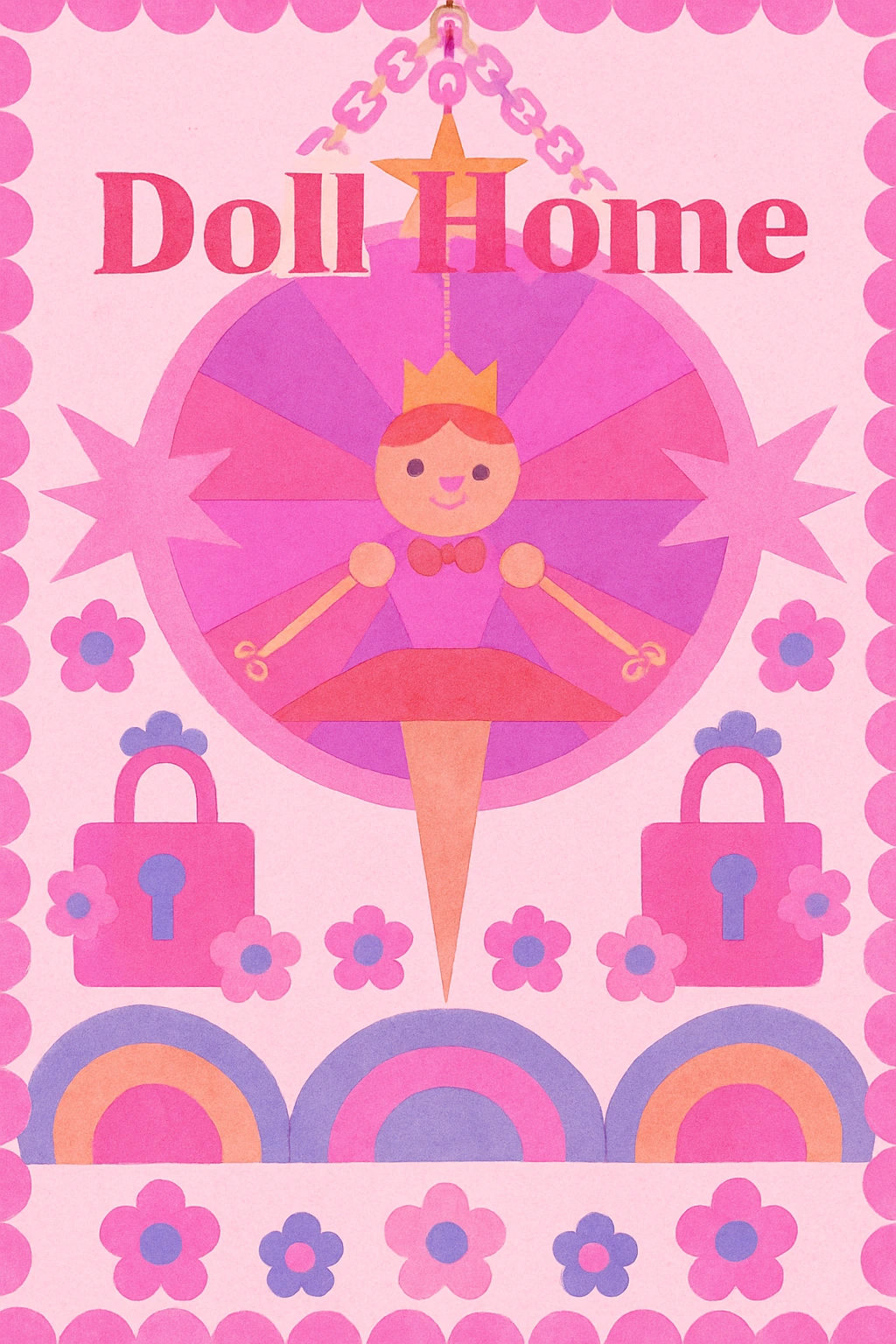
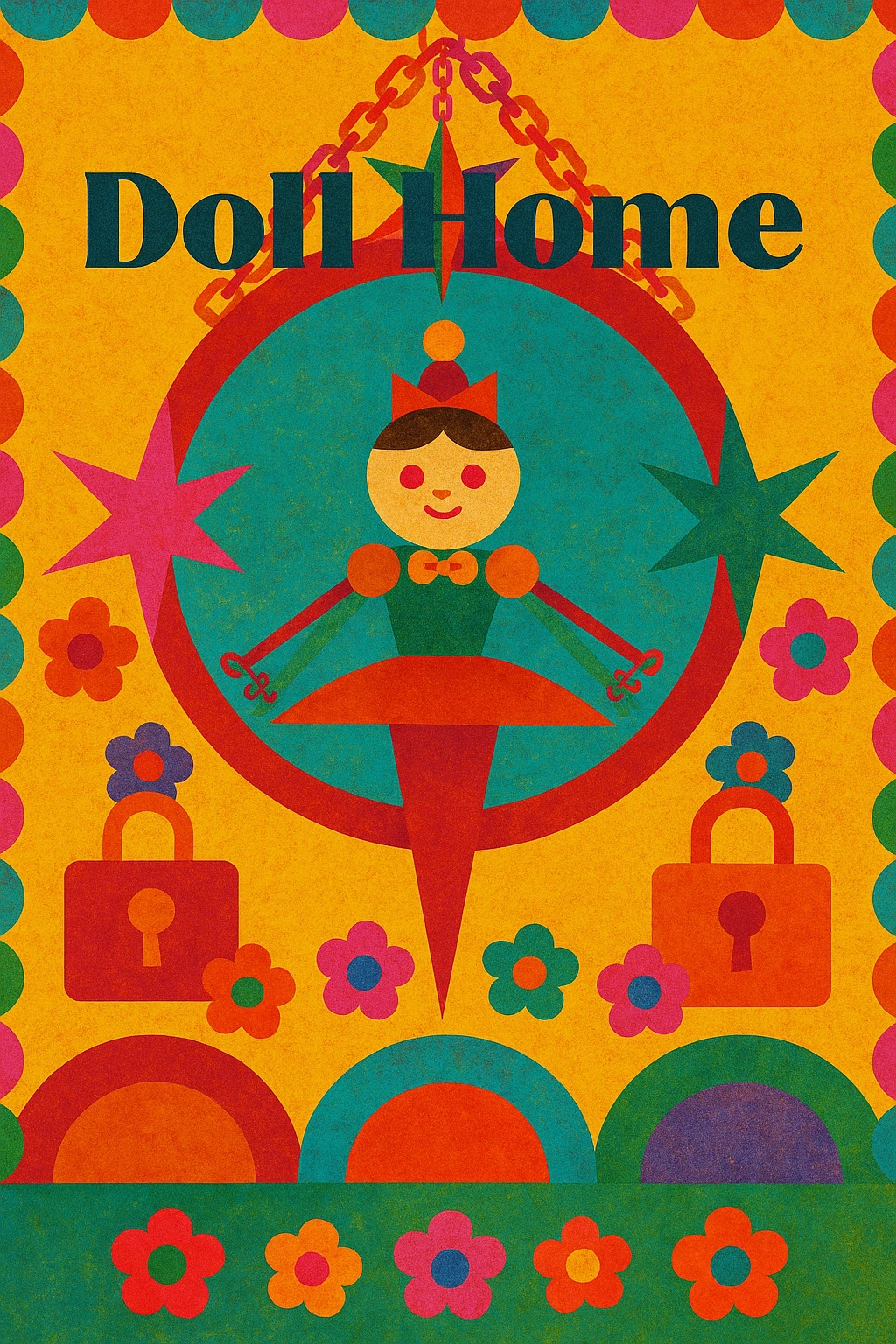
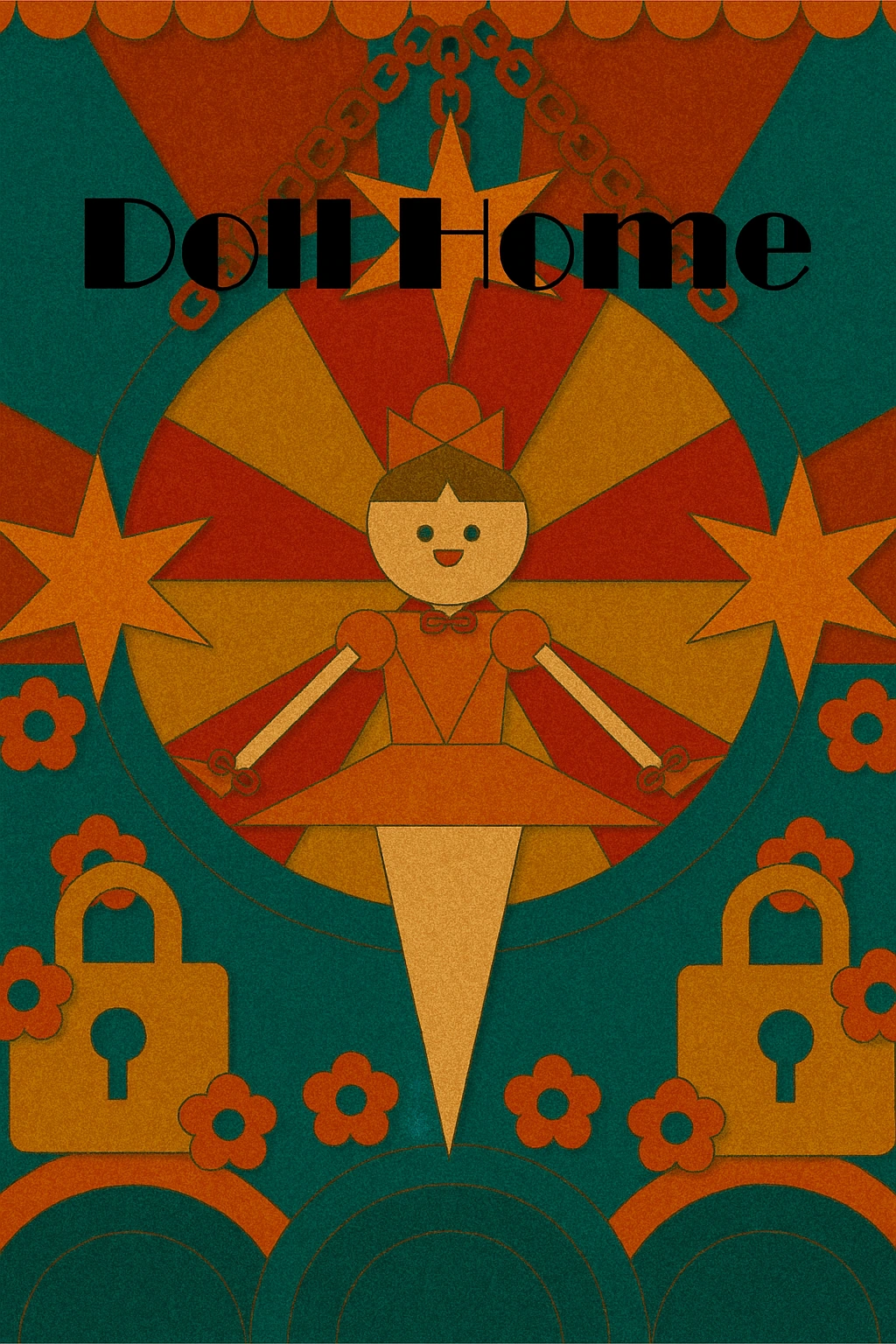
*Use ChatGPT for testing
Feedback
Reflection on Process & Campaign Relevance
The project explores trauma, body image, and gender norms through visual design, using humor and symbolism to create emotional accessibility.
Through iterative sketching, user feedback, and material experimentation, the campaign evolved into a system that is both critical and hopeful.
It is relevant today because body shame, appearance-based expectations, and “nice girl” conditioning remain deeply embedded in families, culture, and media.


Natural


Free


Brave
References
- Clegg, S., & Mayfield, W. (1999). Gendered by design: How women's place in design is still defined by gender. Design Issues , 15(3), 3–16. https://www.jstor.org/stable/1511881
- Cash, T. F., & Smolak, L. (Eds.). (2011). Body image: A handbook of science, practice, and prevention (2nd ed.). Guilford Press.
- Grabe, S., Ward, L. M., & Hyde, J. S. (2008). The role of the media in body image concerns among women: A meta-analysis of experimental and correlational studies. Psychological Bulletin, 134( 3), 460–476. https://doi.org/10.1037/0033-2909.134.3.460
- Gilligan, C. (2011). Joining the resistance. Polity Press.
- Gorman, C. R. (2003). Recent feminist scholarship on design and designers. Design Issues , 19(3), 67–80. https://doi.org/10.1162/074793603768202756
- Gorman, C. R., & Lees-Maffei, G. (Eds.). (2007). Objects, audiences, and literatures: Alternative narratives in the history of design. Cambridge Scholars Publishing.
- Papanek, V. (1985). Design for the real world: Human ecology and social change (2nd ed.). Thames & Hudson.
- Pentagram. (n.d.). Rockaway Beach (Paula Scher) . Retrieved [Month Day, Year], from https://www.pentagram.com
Thank You!